
Saturday Afternoon Classes 2:00pm - 5:00pm

Pick Your Knits and Purls: Continental Knitting Introduction

Instructor: Lorilee Beltman

Skill Level:  All

All are welcome, whether a brand new knitter or someone with fifty years of experience knitting by another method.

Description: 

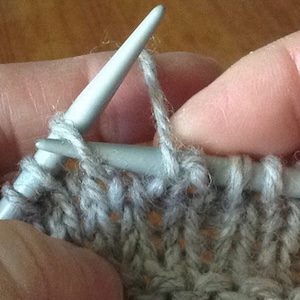
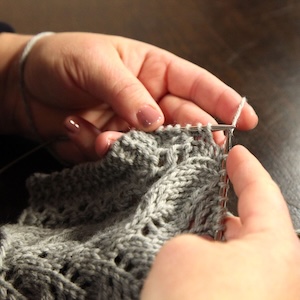
When you knit in the continental style with the yarn held by the left hand, you may minimize your hand motions for a more comfortable, and perhaps speedier way to knit.

Each finger has a job to do. Understand exactly which motions have a bearing on stitch gauge (it’s not what you think!) Learn to even out your knitting by sizing your knits and purls equally. Learn how your choice of tools affects the outcome. Practice the knit stitch, then move on to purl, increases, decreases, and ribbing, where efficiency really pays off.

Included in Class:

  • Digital handout: Pick Your Knits and Purls (will be emailed approximately two weeks before class)

Supplies Needed:

  • 50 grams of smooth, light-colored #4 (worsted-weight), multi-ply wool (no cotton, acrylic, or yarns that easily split)
  • 24-32 inch, smooth, circular needle, size 3.75mm/US5 to 4/5mm/US7, slippery steel preferred. Note: you may use wooden needles but they are not recommended.  No straight needles as they will hinder the learning process.

Homework:

  • If you do not currently know how to knit, you are exempt from the homework, but please arrive at class 15 minutes early to receive help to cast on.
  • For all others: with supplies listed above, cast on 24 stitches and use your current knitting style to work 2” in garter stitch, 2” in stockinette stitch, and 2-3” of k2, p2 ribbing.  Bind off.  Cast on 24 stitches again and knit 4 rows.  Do not bind off, bring to class on the needles with your completed swatch.
  • Print handout prior to class or have it open on an electronic device.

The Norwegian Purl

Instructor: Beth Brown-Reinsel

Skill Level: All

It is helpful (but not necessary) to have the ability to knit Continental – working yarn in the left hand.

Description: 

The Norwegian Purl, a variation of the conventional Continental purl, is noted for its superior tension control, and ease of execution.  The yarn always stays behind the work, making ribbing a breeze and stranded purling on the wrong side a pleasure. 

A swatch will be worked in class to practice this techniques and its applications: garter stitch in purl, one-color ribbing or seed stitch, and the Scandinavian method of working with two yarns in the left hand (knitting, purling, and weaving) on the right side and the wrong side of the work.

Included in Class:

  • Digital handout: Introduction to Norwegian Purl (will be emailed approximately two weeks before class)

Supplies Needed:

  • Two contrasting colors of the same weight yarn, either sport or worsted weight.
  • A pair of appropriately sized circular or short straight needles. (Example: Size 4.5 mm or 5mm/US 7 or 8 for worsted yarn, size 3.75 or 4mm/ US 5 or 6 for sport yarn.)

Homework:

  • Please print the handout prior to class or have it open on an electronic device.

Introduction to Sequence Knitting

Instructor: Cecelia Campochiaro

Skill Level:  Advanced Beginner

Students must be able to cast on, bind off, knit, purl, increase and decrease with help and should be able to read their knitting.

Description:

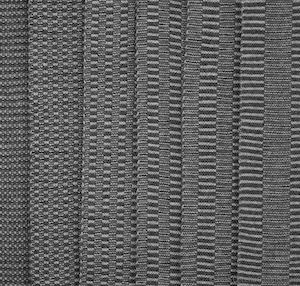
In sequence knitting, textured fabric is created through the repetition of a sequence of stitches, like k2, p2. By varying the sequence, the number of stitches, and the way they are repeated, an endless variety of rich textures are possible.  It is an addictive way to make beautiful fabrics.

This class introduces the concept of sequence knitting, the four main methods: 1-row, serpentine, spiral, and shaped 1-row, and how to incorporate sequence knitting into your projects.

You will make a small swatch using three of the methods to get a feeling for how it works, and you will be able to confidently cast on a sequence knitting project after class.

Included in Class:

  • Digital handout: Introduction to Sequence Knitting (will be emailed approximately two weeks before class)

Supplies Needed:

  • 2 small balls of solid-color yarn (any weight from fingering to bulky), simpler the yarn, the better
  • Needles appropriate for the yarn

Homework:

  • Please print handout prior to class or have it open on an electronic device.

Lace and Cable Surgery

Instructor: Romi Hill

Skill Level:  Advanced

Knitter must be able to read charts.

Description: 

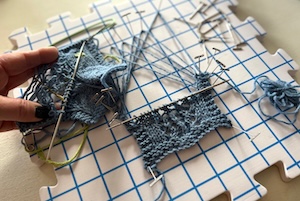
In this hands-on workshop, not only will we discuss techniques to avoid mishaps, students will learn how to rip a simple section of lace and cables back and knit it up row by row without having to rip the entire project out.

We will also go over using duplicate stitch to fix a miscrossed cable.

Students will be given charted knitting homework to be prepared prior to the class: 1 lace swatch with mistakes, and a cable swatch with mistakes, to be operated upon during class!

Included in Class:

  • Digital handout: Lace and Cable Surgery (will be emailed approximately two weeks before class)

Supplies Needed:

  • Homework swatches
  • Double pointed knitting needles at least 2 sizes smaller than used to knit swatch
  • Crochet hook in similar size to double pointed needles
  • Small foam core sheet or something else to which the swatch can be pinned
  • T-pins
  • Point protectors
  • Patience

Homework:

  • You will need to knit two swatches with worsted-weight yarn.  Click here for homework directions.
  • Please print the handout prior to class or have it open on an electronic device.

Currents

Instructor: Margaret Holzmann

Skill Level:  Advanced Beginner

Knitters should be comfortable with basic knitting skills, including a knitted cast-on, knit stitch, decreases (k2tog, ssk, cdd), and knitted bind-off.  All techniques will be demonstrated in class.

Description:

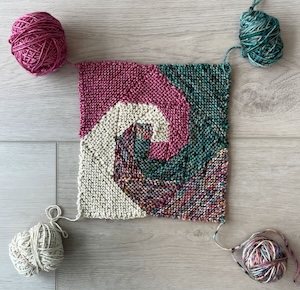
Students will explore an inventive approach to color and pattern drawn from the blanket design featured in The New Color Work (December 2025) by Margaret Holzmann. Known for her clear, thoughtful teaching style and her passion for geometric knitting, Margaret will guide knitters through a process that produces bold, graphic results without traditional stranded colorwork.

This class focuses on geometric knitting: an elegant method that combines familiar techniques in unexpected ways. Only one strand of yarn is used at a time, yet the finished fabric is rich with movement, contrast, and visual depth. The stitches are straightforward, easy to memorize, and satisfying to knit—making the results feel almost magical.

While working a Currents block, students will discover how shaping, directional knitting, and strategic pick-up-and-knit can transform simple garter stitch into a dynamic motif. The block is highly versatile and can be arranged on its own, combined with related blocks, or mixed with additional motifs (included in the handout) to create countless layout possibilities. The design is inspired by a classic quilt pattern that has been beloved for more than a century, reimagined here through knitting.

By the end of the class, students will leave with a deeper understanding of geometric construction in knitting, new tools for creative design, and the knowledge to make other geometric constructions, including the full Currents blanket.

Techniques taught include geometric knitting methods, shaping, pick-up-and-knit, modular construction, and assembly.  Finishing techniques include duplicate-stitch weaving and mattress stitch for garter stitch, with a demonstration of knitting  backwards on wrong-side garter stitch.

Included in Class: 

  • Digital handout with block instructions and yarn requirements
  • Digital pattern for the Currents blanket, including geometric construction notes and instructions for additional coordinating blocks.
  • Handout and Pattern will be emailed approximately two weeks before class.

Supplies:

  • Please click here for a pdf of supplies needed for the Currents Class.  Included is a coloring block to experiment with yarn colors (optional)
    • 75 yards of four different yarn colors in either DK, Worsted or Chunky.  All yarn should be the same weight.
    • Straight or circular needles appropriate for the yarn.
    • 5 strong rubber bands
    • Scissors

Homework:

  • Please print handouts prior to class or have it open on an electronic device.

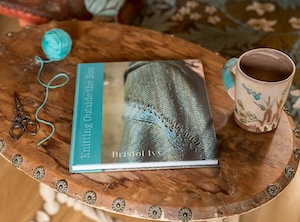
Knitting Outside the Box

Instructor:  Bristol Ivy

Skill Level:  All

Experience needed: comfort with basic garment and accessory construction.

Description:

One of the most interesting and best parts about knitting is the huge variety of patterns available.  But where does the inspiration for those patterns come from?

In this class, we’ll talk about different forms of inspiration and different ways of thinking about knitting, and then explore methods and theory to bring those ideas to reality.  This is a great class if you’re interested in designing, or just want to experiment with all the possibilities knittng has to offer!

Must be comfortable with stitch patterns and have a willingness to play.

Included in the Class:

  • Digital class handout “Knitting Outside the Box” (will be emailed approximately two weeks before class)

Supplies Needed:

  • pencil and sketchbook
  • your favorite handknit item
  • scrap yarn and needles for swatching ideas
  • any items/photos/tear sheets that inspire you

Homework: None

Nålbinding Basics & Beyond

Instructor:  Kasha Linn

Skill Level: Beginner

Knitting and/or crochet skills are not necessary, but can be helpful

Description:

This ancient yarn technique has been used by people across the world, from Egypt and Peru, to the Vikings in Scandinavia. It predates knitting and crochet, and has recently been considered an endangered heritage craft. 

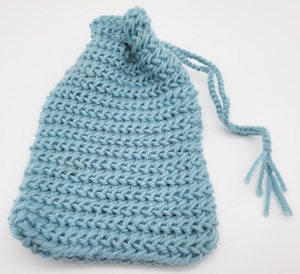
Students will learn and practice several stitch variations, different ways to connect stitch rows, and how these choices affect fabric structure and texture.The class will work together on a small pouch in the stitch of the student’s choice. 

There is a $15 additional supplies fee, payable at registration, which includes a nalbinding needle and 50 grams of wool appropriate for nalbinding.

Included in the Class:

Digital handout: Nålbinding Basics (will be emailed approximately two weeks before class)

Supplies Needed:

  • Student supplies kit, $15 payable at registration.  Kit includes nalbinding needle and 50 grams of wool appropriate for nalbinding.

Homework: 

  • Please print handout prior to class or have it open on an electronic device.

Naniboujou Tam

Instructor:  Laura Ricketts

Skill Level:  Intermediate

Knitter must know how to cast on, decrease, knit and purl in the round, and do color work.

Description:

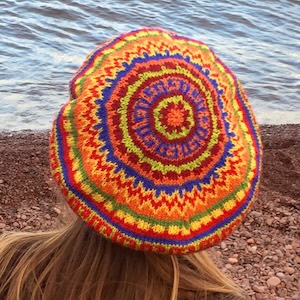
Come knit The Naniboujou Tam together with the designer and other interested folk! This tam was inspired by the fantastic dining room in Naniboujou Lodge and Restaurant on Minnesota’s North Shore just east of Grand Marais. The lodge was built at the end of the Roaring 20s to be a luxurious retreat club, when the stock market crashed in October 1929. The main lodge with its gorgeous dining room was nearly finished. This dining room’s ceiling was inspired by Cree Indian designs and painted by Antoine Gouffe with clear, vibrant colors.

We will gather to talk about the legacy and begin the colorwork of the tam while learning various colorwork techniques in carrying unworked yarn. 

TBA: we are working with a local yarn store to provide kits with the seven yarn colors needed. 

Included in Class:

  • Naniboujou Tam pattern (will be emailed two weeks before class)
  • Digital Naniboujou Tam hand-out (will be emailed about two weeks before class)

Supplies Needed:

  • Purchase the kit or the following yarns:
    • Rauma Finullgarn (100% Norwegian 2-ply wool yarn, fingering weight; 191 yards [175 m] / 50 g [1.75 oz.] ball):  colors: one ball each in #458 Bright Green (MC), #4405 Bright Yellow (CC1), #418 Red (CC2), #437 Bright Royal Blue (CC3), #4205 Orange (CC4), #454 Chartreuse (CC5), and #444 Burgundy
    • Alternate Yarn: Knit Picks Palette (100% Peruvian Highland Wool; 231 yards [211 m] / 50 g [1.75 oz.] ball); colors: one ball each in #24585 Grass (MC), #25531 Canary (CC1), #24246 Pimento (CC2), #24582 Celestial (CC3), #24554 Orange (CC4), #24257 Edamame (CC5), and #25539 Hollyberry (CC6) 
  • 16 in circ needle, size US 2 / 2.75 mm, and 16 in circ needle and set of 5 double pointed, size US 3 / 3.25 mm, or size needed to obtain gauge 
  • Stitch Markers
  • Tapestry Needle
  • Scissors

Homework:

  • Purchase the kit or yarn, work a gauge swatch. GAUGE: 32 sts x 41 r = 4 in / 10 cm in larger needle over stranded pattern, worked in the round and blocked.
  • Complete Ribbing for Tam: CO 144 sts using smaller needles and long-tail method with MC. PM and join in the round, being careful not to twist.  
    • RND 1: * K2, p2; rep from * to end. Rep this rnd until piece measures 1.25 in (3 cm).
    • NEXT RND: K2, *(k2, kf&b) ten times, k5; rep from * three more times, k2. 184 sts.
  • Print out handout and pattern prior to class or have them open on an electronic device.

Our spinning demonstrations are sponsored by Get Bentz Farm. 
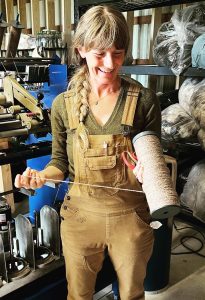
Theresa Bentz of Get Bentz Farm, Northfield, MNAfter growing up in the city and suburbs, the owners of Get Bentz Farm felt a need to be closer to nature and to be more connected to where their food came from. 

In 2014, they found a farm house for sale and later that year they decided on and purchased their first two Icelandic sheep. 

Once they had a good size flock they began marketing the amazing meat and wool. Initially, they found that many mills in the area do not process dual coated long wools, which slowed down their growth in yarn, but they did find a great market for wool filled bedding products and batting for spinning. 

Today, they have a variety of yarns, batting and roving as well as finished products like dryer balls, sheepskins, and wool bedding. Most recently, they opened their own Get Bentz Wool Mill as well as their own line of yarn – Badgerface Fiber.
Jean

Vice President

(Term 1, Year 2)

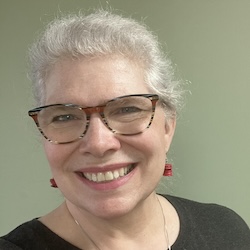
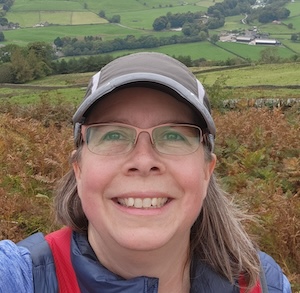
Jean Gross has had an interest in all things fiber since, at the age of 5, her mother gave her fabric scraps to keep her occupied. She is fluent in knitting, crocheting, tatting, embroidery, sewing, quilting and spinning, thanks to her mother, Janice, and grand mother, Clara. But Jean’s favorite thing to do with fiber is help others to explore its possibilities. She has taught at the Iowa State Fair, Des Moines Library, Freedom for Youth, the Des Moines Knitting Guild, Shepherds Market, local yarn shops and also teaches privately. Jean has served on several non-profit boards including FiberSmiths of Iowa and the Des Moines Knitting Guild. Jean lives in north central Iowa with her husband, Dave, and faithful canine, Rolo. She has published several knitting patterns.

Andi

Newsletter Editor

Andi (she/her) learned to knit from her mom over 40 years ago. She remembers going to MKG meetings in college when they were held at St. Kate’s, her alma mater. She knit on-and-off again for a while, and really dove back into the craft in 2015. She is also a quilter. She enjoys traveling and her husband is happy to stop at a yarn store or to look at sheep while on vacation. She and her husband live in the St. Paul area, both enjoy their respective crafts, and also going to the State Fair multiple times a season.

Judy

Yarnover Committee Chair

From one of her mother’s friends, Judy learned to knit a pair of “paputki,” which are simple Polish house slippers.  Somehow this gave her the confidence to knit her boyfriend a cabled pullover sweater for Valentine’s Day which was graciously accepted and has lived in the bottom of the bottom drawer of said boyfriend’s dresser for fifty plus years.  Though she has made a few sweaters since then, she mostly knits blankets, scarves, hats and toys.

Thyra

Marketing Director

(Term 1, Year 2)

I grew up watching my mom knit. She tried to teach me as a kid and I never enjoyed it, but after finishing college I found myself with extra time and no hobbies. In the last 20 years I have dove in all the way and love to learn new and challenging techniques. As my fiber love has grown, I have also started raising sheep in order to go from sheep to sweater. I love interacting with the sheep who have big personalities and learning to process and spin the wool has been a great adventure.

Maria

Technology Director

(Term 1, Year 1)

Maria learned to knit from her grandmothers nearly 20 years ago and knit off and on through her teenage years, but really got hooked during graduate school. Since then, she has embraced the "never not knitting" mentality and has been spotted knitting on backpacking trips, on a seaplane, and at concerts to name a few. She has also just taught herself to spin. Maria is a recent transplant to the Twin Cities with her husband and two cats, and they enjoy hiking, running, and embracing the Minnesota lake culture.

Nikky

Programming Director

(Term 1, Year 2)

Nikky was first introduced to knitting in 2012 when her visiting sister-in-law taught her the basics of casting on and the knit stitch. A few weeks later, she learned how to purl from her mother-in-law. From there, it quickly became a passion and she has taken on each new project with a desire to expand her skill and discover new techniques. She loves a good mystery (knit-a-long) and knits way more shawls than a single person can wear in a month.

Deb

Service Director

(Term 1, Year 2)

Deb learned to knit in the early 1980s as a happy by-product of Hill Street Blues fandom. For a couple of years, she and a gaggle of other students met weekly to watch the show, and one of those friends was always knitting. As it is with so many knitters, that friend was enthused to teach someone else. Deb has been knitting ever since and particularly enjoys playing with colorwork and knitting sweaters. She is constantly astonished at the skill, enthusiasm, and generosity of MKG members. (she, her, hers) (See our Service Knitting Page for more information about our current projects and donation process.)

Meg

Membership

(Term 1, Year 1)

Meg learned to knit in Bloomington, Indiana at the age of 7 or 8 when her Aunt Anneke who worked in a local yarn shop had to take her along to work. Now a St. Paul denizen, she follows in the tradition of her grandmothers Pauline and Cornelia as a passionate knitter of sweaters. She loves colorwork, bright yarn and meeting new members. Meg is an extrovert and is always happy to connect!

Kathryn

Treasurer

(Term 1, Year 1)

Kathryn taught herself to knit in grad school, which is a terrible time to pick up a highly addictive hobby! She has since taken many classes, learned from master knitters and explored numerous techniques like brioche, double knitting, bead work, and more. She always has at least four projects on the needles but mysteriously, her yarn stash never seems to go down. Her favorite projects are shawls and socks. In addition to knitting, she does some crochet, tatting, spinning, and weaving. She was inspired to volunteer for the Guild after her first Great Guild Getaway and is excited to give back to this community of incredible knitters!

Kendra

Secretary

(Term 1, Year 3)

Kendra lives in the Twin Cities and learned to hand knit from her mother in middle school. In the last few years, she has also learned crochet and machine knitting. Kendra enjoys knitting items to donate and challenging herself with new techniques. She prefers knitting in the round with colorful yarn. (she, her, hers)

Meg

President

(Term 1, Year 2)

Meg grew up surrounded by makers. Her mom, a master quilter, former Home Ec teacher, and 4-H club leader in Duluth, taught her to sew, embroider, and cook. She won a trip to the State Fair as the Dress Review Princess at 13! Another MKG member taught her to knit continental style 15 years ago. Meg can’t sit still and NOT be knitting, embroidering, rug hooking or sewing. Favorite thing to knit? Mittens! She loves taking classes and learning new things – absolutely amazed and inspired by all the amazing knitters in the guild! (she, her, hers)

Kathy

Webmaster

Kathy has always been into crafts, but didn’t teach herself to knit until after college. She really got hooked while living in San Francisco when a friend opened a knitting store. To pitch in, Kathy started knitting up fun (and odd) things for window displays, as well as teaching classes. In the last couple of years, she has started designing her own knitting patterns (many of them available for free on Ravelry!) with toys and mittens being her primary obsessions. (she/her/hers)